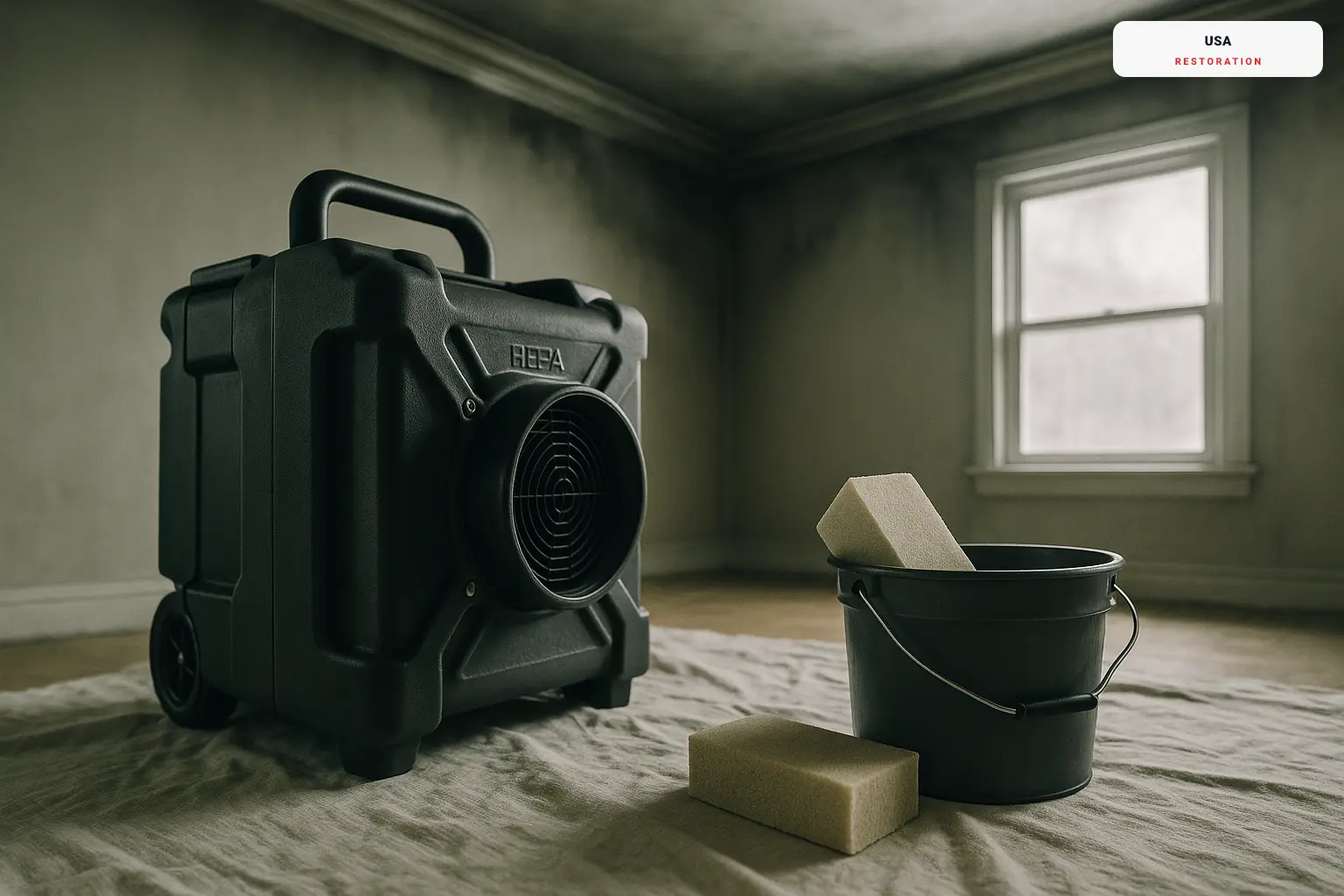
Newark sits in the northern New Jersey urban corridor with direct exposure to Nor'easters, tropical remnants, and the short-duration convective downbursts that can drop two inches of rain on a city block in under an hour. The Passaic River and its tributaries run along the western edge of Essex County, and when those waterways rise after sustained rainfall across the watershed, low-lying sections near the river and in the Ironbound District flood faster than storm drains can drain. Newark Water Damage responds to storm losses at any hour — we secure the building envelope first, tarp breach points and board wind-damaged openings, then extract and dry before the second wave of a multi-day storm compounds the original loss. We know which Newark neighborhoods drain quickly and which hold water for days, and we size drying equipment to the specific moisture load in each building rather than applying a standard setup that may be inadequate for the actual scope of the damage. For storm response across Essex County, call 551-351-9705.
- Emergency board-up + tarping
- Wind-driven rain water extraction
- Roof + envelope repair
- Tree impact damage
- Insurance documentation
- Full structural rebuild
Wind-Driven Rain Vs. Flood — The Distinction That Determines Coverage
This distinction matters because it determines which insurance policy pays. Wind-driven rain that enters through a damaged building envelope (wind broke a window, lifted shingles let rain through the roof, damaged siding admitted water laterally) is covered by standard homeowners insurance as wind/storm damage. Rising surface water that enters at ground level — overland flooding, stream overflow, surge — is FLOOD damage, which standard homeowners does NOT cover. That requires NFIP (National Flood Insurance Program) flood insurance.
For NJ properties, both can happen in the same storm. Our documentation clarifies the source of intrusion so the right policy pays the right portion. Photos of where water entered (broken roof = wind; rising at ground level = flood), measurements of high-water marks, narrative of the timeline (wind hit first vs flood arrived later) — all become part of the cause-of-loss record.
Misclassification is one of the most common reasons NJ storm-damage claims get denied or under-paid. We frame the loss honestly — neither inflating to chase coverage nor under-stating to make a claim go away — so the carrier can settle the right portion under the right policy.
Emergency Board-Up + Tarping — The First Hour
If a storm has compromised your building envelope, the priority before anything else is preventing additional damage from continued exposure. Board-up applies to broken windows or doors, missing siding sections, or any opening that compromises the envelope. Tarping applies to roof damage — missing shingles, lifted ridge cap, tree impact through decking — where the next rain event would extend the loss.
Our crew carries 2x4s, OSB, screws, and tarp materials on standard storm response. We secure the property in the first visit, photograph the work for insurance documentation, and stabilize the situation so the rest of the restoration can proceed at a non-emergency pace. Most storm-response calls for our Newark dispatch start with a board-up phase before any water extraction begins.
Important note for NJ homeowners: do not sign anything from a contractor who shows up unsolicited after a storm. Storm-chase contractors trail major weather events specifically to collect Assignment of Benefits (AOB) signatures, which transfer your insurance claim rights to the contractor. AOB signatures lock you out of choosing your own restorer mid-job and frequently end up in litigation. Read every document before signing, and never sign on the first call.
Storm Damage Restoration and the rest of your recovery
A property loss in Newark rarely stays in one lane — storm damage restoration often overlaps with emergency water mitigation, soot removal, mold removal, sewer backup remediation, finish carpentry and rebuild, and our crew handles all of it under one contract. We dispatch the same standard to Elizabeth storm damage restoration, Jersey City storm damage restoration, Irvington storm damage restoration, East Orange storm damage restoration and everywhere else across Essex County.
If you searched for restoration company near Newark, you have reached a local team — call 551-351-9705 any hour. For background, read Why Newark's Pre-War Housing Fails When Water Gets Inside: A Building-by-Building Guide for Essex County Homeowners on our blog, or head back to our Newark home page to see everything we do.