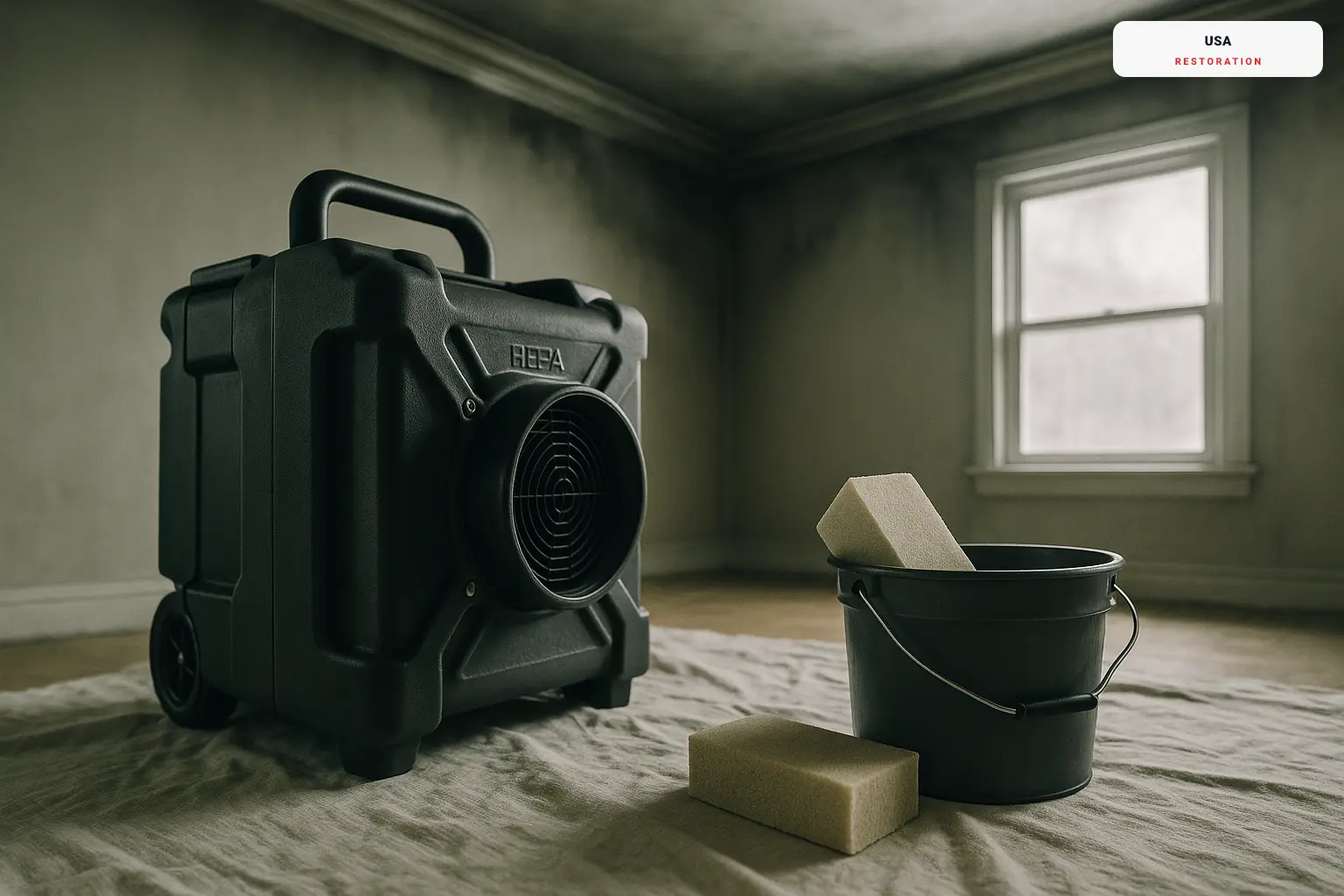
Newark sits on a combined sewer system that dates to the nineteenth century, and in a heavy rain event those combined mains surcharge — the pressure backs up through laterals and surfaces through the lowest fixtures in any building on the line. A sewage backup in a Newark apartment building is not a plumbing problem; it is a biohazard event carrying bacteria and pathogens that remain viable on surfaces long after the water recedes and the odor fades. Newark Water Damage responds in full personal protective equipment, establishes containment between the affected space and the rest of the building, extracts and properly disposes of all contaminated water and soaked porous materials, and disinfects every hard surface to an EPA-registered pathogen-clearance standard. We do not clear a space until it is both dry and treated, because a space that is visually clean but still damp is still actively cultivating biology. Combined-sewer backups in the Ironbound, in the lower North Ward, and along the McCarter Highway corridor happen multiple times per decade; call 551-351-9705 the moment you see water rising from the floor drain.
- IICRC S500 Cat-3 protocol
- Full Tyvek + HEPA respirator PPE
- Porous-material removal to flood line
- EPA-registered antimicrobial
- Air quality clearance before reconstruction
- Insurance documentation
What Cat-3 Sewage Cleanup Protocol Actually Involves
Category-3 water under IICRC S500 is grossly contaminated water — sewage, river water, ground intrusion from agricultural runoff, certain flood water. The protocol is fundamentally different from clean-water restoration because the water itself is hazardous to occupants and to our crew.
Phase 1 — site control: isolating containment (zip walls + plastic) around the affected area, negative-air pressure with HEPA-filtered exhaust, full PPE for crew (Tyvek suits, P100 respirators, gloves, foot covers), occupants evacuated from the affected area for the duration of the cleanup phase. The site is treated as a contamination zone, not just a wet zone.
Phase 2 — removal: all porous materials below the documented flood line come out. Carpet, carpet pad, baseboards, drywall to 16-24 inches above contamination line, insulation, untreated wood, anything absorbent. Materials are bagged for disposal, not stockpiled in the building. We document everything removed for the insurance claim.
Phase 3 — decontamination: hard surfaces below the contamination line get HEPA vacuumed, washed with detergent, rinsed, then treated with EPA-registered antimicrobial. Drying equipment runs concurrently to bring the structure back to dry standard.
Phase 4 — verification: air quality testing confirms the space is safe for re-occupancy before reconstruction begins. Done correctly, the affected space is clearable in 5-7 days for the cleanup phase, then reconstruction follows.
What To Do During An Active Sewer Backup
- Stay out of the affected area. The water is contaminated. Children and pets out, contents that can be removed safely (without wading) come out, anything you can lose to the loss is acceptable risk if it keeps people out of the contaminated water.
- Do not use plumbing in the house. Every flush adds to the volume of contaminated water. Stop water use at all fixtures until the backup is resolved.
- Call us. We respond with full Cat-3 PPE and protocol. Dispatch confirms loss type so the truck arrives equipped for sewage rather than clean water.
- If you have insurance with the endorsement, open the claim before we arrive so we have the claim number for direct billing. If you do not have the endorsement, we will discuss out-of-pocket scope at our first on-site visit.
- Document with photos from a safe distance. Wide shots of the affected area, close-ups of any visible contamination, photos of the water source if visible. These become the foundation of the insurance scope.
Our standard Newark response time for active sewer backups is within the hour. The faster we get there, the less material has to come out and the smaller the eventual reconstruction scope.
Sewage Cleanup and the rest of your recovery
A property loss in Newark rarely stays in one lane — sewage cleanup often overlaps with emergency water mitigation, soot removal, wind damage repair, mold removal, finish carpentry and rebuild, and our crew handles all of it under one contract. We dispatch the same standard to Elizabeth sewage cleanup, Jersey City sewage cleanup, Irvington sewage cleanup, East Orange sewage cleanup and everywhere else across Essex County.
If you searched for restoration company near Newark, you have reached a local team — call 551-351-9705 any hour. For background, read Frozen pipe burst — why it happens and how to prevent it in NJ winters on our blog, or head back to our Newark home page to see everything we do.